


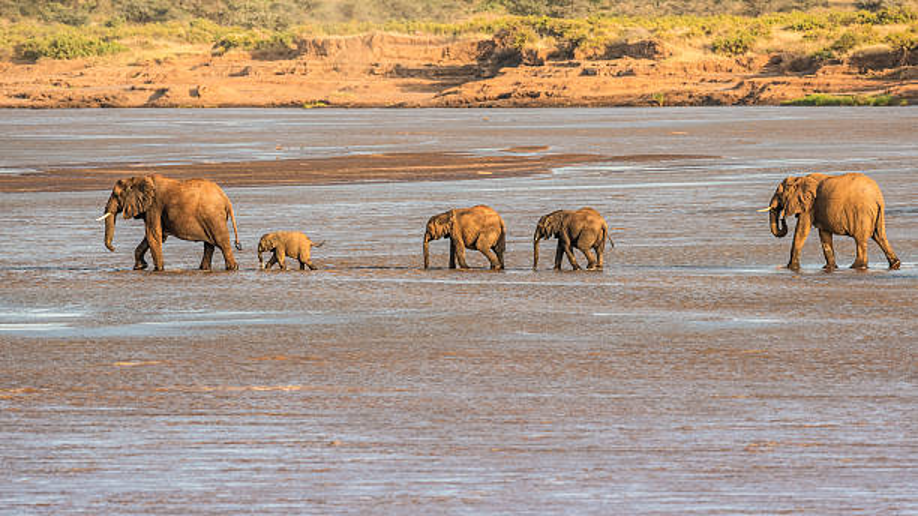
Every year, billions of animals embark on some of the most incredible journeys on Earth. Salmon swim against the current to return to their first homes. More than a million wildebeest cross the African plains. And butterflies take flight in a migration so big it takes generations to complete.
Ever wonder where these animals are going, why they’re on the move and how they get there? Let’s find out!
What Is Animal Migration
Have your retired grandparents ever gone south to Florida in the winter and returned in the spring? Migration is a little like that, only a lot longer: an epic journey that animals repeat, often following the same route each season. And these trips can stretch across countries and continents over days, weeks or months.
Why Do Animals Migrate
Migration is tiring and dangerous! If you’re a migrating animal, moving your body long distances zaps precious energy. Leaving the safety of your home means more predators have a chance to grab you. So why risk it? Here are three good reasons:
To Find Food and Water
Just like us, some animals have favourite foods. If you’re craving a certain snack, we can go to the grocery store to get it. Animals can’t do that. Some animals love to eat the same type of food year-round, so they must move with the seasons to find it. Others like to eat different foods depending on the season. Take the Galapagos Giant Tortoise. In the wet season (January to June), the highlands become lush with greenery, and tortoises climb up to graze on grasses and plants. In the dry season (July to December), they move down to the lowlands, where herbs and shrubs are abundant.
Photo credit: Credit: iStock.com/Delves Photography
To Find Better Weather
Florida manatees aren’t adapted to the stress of cold water. They need water temperatures above about 20°C to stay healthy. In the winter they survive in a smaller area because they need to stay near warm water. When temperatures rise in the summer, they can travel farther and swim in a larger space.
Photo credit: Credit: iStock.com/Thierry Eidenweil
To Find a Place to Have Babies
Many animals are guided by instinct to return to the same spot where they were born to have their babies or lay their eggs. When it’s time for the European eel to reproduce, it swims all the way back to the place it was born.
Photo credit: Credit: iStock.com/slowmotiongli
Great Animal Migrations
Caribou: Commuting in Cold Climates
Who holds the world record for the longest land migration? It’s our very own Canadian caribou! Travelling in herds of up to 200,000, they walk more than 1,200 km between their winter homes and calving grounds, where they give birth in spring.
Photo credit: Credit: iStock.com/Ian Hromada
Wildebeest: The Million-Mammal Migration
It’s called The Great Migration for a reason! Every year, more than a million wildebeest make an epic migration in between Tanzania and Kenya in Africa’s Serengeti. They travel between wet and dry areas in search of fresh food and water. Gazelles and zebras often join the trek, too. The combination of the massive distance they travel and the millions of animals on the move makes this migration one of the world’s most spectacular wildlife events.
Photo credit: Credit: iStock.com/Jianmei Wang
Arctic Tern: Flying from Pole to Pole
This tiny bird may be less than 40 cm long and weigh only about 100g (about the weight of four AA batteries) but it’s mighty! Every year, it flies 88,000 km, travelling from the Arctic to the Antarctic and back again. Over its lifetime, that total distance equals flying to the Moon and back three times. Talk about a frequent flyer!
Photo credit: Credit: iStock.com/Imogen Warren
Monarch Butterfly: Soaring and Gliding Across Generations
This colourful insect flies nearly 4,800 km from southern Canada and the northern United States down to central Mexico. The journey north takes two or three generations to complete, as the monarchs lay eggs partway, and their children continue the trip. But the final generation has superpowers! Born to live up to nine times longer than their parents and grandparents, these “super” monarchs fly the entire way south all by themselves, laying eggs when they get there for the next generation to continue the cycle.
Photo credit: Credit: iStock.com/dottedhippo
Pacific Bluefin Tuna: Swimming from Japan to California
These powerful fish swim 8,000 km across the Pacific Ocean from the Sea of Japan to the coast of California. The water can be as cold as 9℃, but tuna have a superpower: they’re warm-blooded. All the heat they generate from swimming keeps them warm, and boosts their speed and power. Once they reach maturity, they’ll swim all the way back to where they hatched to breed the next generation.
Photo credit: Credit: iStock.com/T-Fujishima
Salmon: Swimming Upstream
These fish swim against strong currents and evade predators on the way from the ocean to the streams where they were born to lay eggs. Most salmon species only make this journey once in their lifetime.
Photo credit: Credit: iStock.com/Kara Capaldo